
Key Takeaways
- Many are unaware that printed photos deteriorate over time, raising concerns about preservation.
- Photo scanning transforms printed photographs into digital files, allowing safer storage and sharing.
- People often delay scanning because they feel overwhelmed by the number of photos and by the organizational challenges.
- Interest in digital preservation has risen, with families wanting to safeguard their history from risk and loss.
- Ultimately, photo scanning is about reducing risk and preserving memories for future generations.
Estimated reading time: 4 minutes
Why People Are Finally Saving Their Old Photos
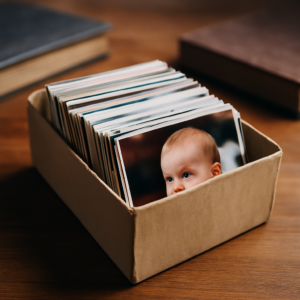 Most families don’t realize that their printed photos are vulnerable until something happens. A shoebox under the bed. An album on a closet shelf. Decades of birthdays, weddings, vacations, and faces that exist in only one fragile form. For years, those photos have seemed safe just because they are familiar. They are not. Printed photos were never built to last.
Traditional (analog) photographs fade over time. Adhesives break down. Paper absorbs moisture from the air. Heat, humidity, floods, fires, and even routine moves quietly take their toll. Archivists say the damage often occurs slowly, then all at once. A photo sticks to glass. Colors wash out. A box is lost during a move. A storm hits, and paper does not survive. When that happens, there is no rewind button.
This reality is why more families are asking a fundamental question that feels overdue. How do you actually save your photos?
What Photo Scanning Really Is, In Plain English
Photo scanning means turning printed photographs into digital files. Those files can be stored, copied, shared, and backed up. The original prints still exist, but the memory no longer depends on a single piece of paper. For many households, scanning is the first time their family history exists in more than one place.
Why People Wait, Even When They Care Deeply About Their Photo History
Most people don’t delay because they devalue their photos. They delay because the task feels overwhelming. There may be thousands of pictures, and names and dates seem hard to organize. For now, the box feels safe. Life gets busy. Professionals in the photo scanning industry say the most common regret they hear isn’t about effort or expense. It’s about timing. Families often wish they had acted before a move, before a storm, or before losing the one person who could identify the faces and stories in the photos. Once that context is gone, it cannot be recovered.

A Growing Shift Toward Digital Preservation
Interest in photo scanning has increased alongside a larger movement toward digital preservation. Home movies, slides, audio recordings, and family documents are all being converted for the same purpose. People seek peace of mind. Unlike many technology services, this category is driven more by emotion than features. Relief. Gratitude. The joy of seeing an image clearly for the first time in decades. The ability to share family history with children who have never seen it. Companies in the industry, including ScanMyPhotos, have experienced a rise in demand as more people face how much of their personal history exists in only one fragile form.
Not a Tech Trend, But a Risk Decision
At its core, photo scanning isn’t about technology; it’s about reducing risk. Families insure their homes, back up their phones, and protect important documents. Yet, many still leave their most personal images vulnerable to time and chance. Saving photos doesn’t change the past, but it safeguards it. As awareness increases, many families ask not if they should scan their pictures, but when. For those who have already faced loss, the decision often comes sooner than they expect.
Photo Scanning Frequently Asked Questions (FAQs)
Why should I save old photos instead of leaving them in albums or boxes? Printed photos fade, stick together, and can be damaged by moisture, heat, floods, or everyday accidents. Digitizing old photos creates copies that are no longer vulnerable to a single physical event. The original prints still exist, but the images are protected and easier to share and store.
What does it actually mean to save old photos? Saving old photos means converting printed photographs into digital files. Those files can be backed up, shared with family, and stored in multiple places. It does not replace the original photos. It reduces the risk of losing the memories if something happens to the physical copies.
When is the best time to save old photos? The best time is before something unexpected happens. Many people wait until after a move, a storm, or the loss of a family member, wishing they had acted sooner. Saving old photos earlier preserves both the images and the stories connected to them, while that information is still available.
[Revised on December 15, 2025].