When someone dies, family photos can suddenly feel overwhelming. Here’s how to protect, share, and preserve them before they are lost, damaged, or forgotten.
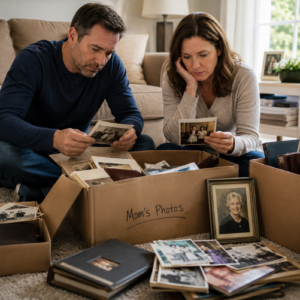
Many people don’t usually think about family photos after someone passes away until they find themselves in a garage, attic, or spare room filled with boxes they feel too emotional to open. Whether it’s the loss of a parent, a grandparent moving into assisted living, or having to sell a family home, suddenly a whole collection of albums, yellow Kodak envelopes, slides, VHS tapes, film reels, and old hard drives is laid out before them. This moment can be overwhelming, but it also offers a chance to cherish and remember those special memories.
At first, it looks like a cleanup project. Then someone opens a box and finds dad holding a newborn, grandma laughing at a picnic table, or one of the last photos taken before illness changed everything.
That is when old photos stop feeling like stuff. They become the proof that a life happened.
This is why so many families search for “family photos after death,” “what to do with old family photos,” “inherited photo albums,” and “how to organize deceased parents’ photos.” They are not only looking for storage tips. They are trying to make emotional decisions while grieving.
The first thing to do is protect the photos before anything gets donated, sold, tossed, or packed away. Gather printed photos, negatives, slides, VHS tapes, camcorder tapes, DVDs, CDs, film reels, memory cards, and old digital devices into one safe place. Do this before the house is cleared out.
Try asking yourself, what would hurt the most to lose? That simple question can help you distinguish between clutter and those precious, irreplaceable memories. Often, families fall into the trap of trying to organize everything at once, waiting for just the right moment, enough time, or the perfect system. Unfortunately, years can slip by, and before you know it, photos fade, tapes wear out, and the loved ones who shared those stories may no longer be here to tell them.
Save first. Organize later.
Once photos and videos are digitized, everyone can receive copies. Siblings do not have to argue over the only album. Grandchildren can see faces they barely knew. Family stories can move out of boxes and back into everyday life.
That matters because a photo without a story can become a mystery in one generation. Ask older relatives’ names, places, dates, and what happened right before or after a picture was taken. Even a simple phone recording while looking through an album can become one of the most valuable things your family saves.
Digital memories also deserve our care. When estate cleanouts happen, you’ll often find locked phones, broken laptops, dead hard drives, forgotten passwords, and cloud accounts that no one can access. Remember, a memory isn’t truly safe if no one can find it. It’s not about keeping everything forever in the same old boxes. Instead, the important goal is to ensure that the moments that truly matter are well-protected, shared, and easy for loved ones to find when they need them.
Most adult children do not want forty boxes of unorganized albums in their garage. They want the people, places, voices, and stories inside those boxes.
A digital family archive can turn a painful estate task into something healing. One shared folder can bring siblings together, help grandchildren ask questions, and give a family something meaningful to hold onto after a loss.
America is now going through a massive family memory transfer. Baby Boomers spent decades documenting life with prints, slides, camcorders, VHS tapes, and film reels. Those collections are now being handed down, cleaned out, or thrown away faster than many families realize.
That is the real risk.
Families are not just deciding what to do with old photos. They are deciding what parts of someone’s life will still be seen.
“I thought we were just cleaning out my parents’ garage,” said Karen Miller of Tucson, Arizona. “Then we found a tape of my dad teaching me to ride a bike. We all stood there crying because we had forgotten what his voice sounded like.”
That is why this matters.
Preserving family photos after death is not really about technology. It is about making sure the faces, voices, places, and everyday moments that shaped a family do not disappear when the boxes are gone.
FAQs
What should I do first with old family photos after someone dies? Start by gathering all photos, slides, negatives, tapes, and digital media into one safe place. Do not leave them scattered around the house, garage, attic, or storage unit. The first job is simple: protect the memories before anything gets tossed, donated, damaged, or forgotten.
Should old VHS tapes and film reels really be saved? Yes. VHS tapes, home movies, and old film reels often hold moments nobody remembers recording. They may include voices, birthdays, vacations, holidays, and people the family has not seen or heard from in years. These formats also break down over time, so waiting can make them harder to recover.
Do I need to organize thousands of photos before digitizing them? No. That is where many families get stuck. You do not have to sort every picture perfectly before preserving it. Save first, organize later. Once the photos are digital, family members can rename, sort, share, and choose favorites without risking the originals.
How do families fairly divide photos between siblings? Digitizing can prevent a lot of family conflict. Instead of one person keeping the only album or box, everyone can receive the same digital copies. The originals can still be saved, but the memories no longer belong to just one person.
[updated May 18, 2026]