
How to Restore Old 8mm and 16mm Home Movie Film (ScanMyPhotos “ReelMagic Fix & Restore” Guide)
If you only have a moment, key takeaways
- Restoring vintage home movies can revive cherished memories and provide a new way to experience family history.
- Old 8mm and 16mm films are often neglected due to difficulties in properly viewing and sharing them.
- Digitizing films with ScanMyPhotos’ “ReelMagic Fix & Restore” enhances clarity, color, and stability without altering the original content.
- People often discover precious moments and meaningful details when they watch their old films again for the first time.
- Accessing digitized films allows easy sharing and enjoyment, turning long-forgotten reels into immediate treasures.
[Estimated reading time: 7 minutes
You remember filming home movies using 8mm film. But most people don’t remember the last time they watched it. Here’s how to restore old home movies so you can watch them again. This article discusses how to reduce dust and scratches, improve color and brightness, enhances the conversion of your film reels to digital files you can watch and share.
It starts with one box of movie film
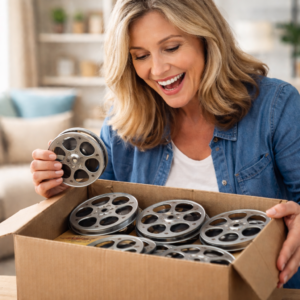
When you’re ready, here are three ways to digitize your home movie reels and to add “ReelMagic Fix and Restore”. 1) Scan a few 8mm reels. 2) Scan a few 16mm reels. 2) Scan my entire movie collection.
What’s actually on those reels
When people finally watch old home movies again, the reaction is rarely what they expect. Most assume there will be a few short clips, maybe a birthday or a holiday. Instead, what appears on screen feels much bigger. A parent looks younger than they have ever looked. A home appears the way it once was, not the way it is now. Small, everyday moments that once felt ordinary suddenly carry meaning. People who are no longer here appear again, moving, smiling, and fully present. Photos capture a single instant, but film captures everything around it. For many families, these reels hold the only moving record of entire chapters of their lives.
Why old films get left behind
These films were not forgotten because they did not matter. They were set aside because they became difficult to watch. Projectors stopped working or were thrown out. The film itself felt delicate and harder to handle. There was no simple way to share it with others. Watching it began to feel like something that required effort instead of something you could simply enjoy. Over time, the reels stayed where they were, moved from place to place, packed away with care but rarely revisited.
What happens to film over time
Film does not stay the same, even when it appears unchanged. As years pass, colors begin to shift and lose balance. Dust and small scratches become more visible. Footage can flicker slightly from frame to frame. The material itself can become more fragile. These changes happen slowly, which is why they often go unnoticed. But the version of the film that exists today is not exactly what it was when it was first captured.
How to digitize and restore old home movies
The ScanMyPhotos “ReelMagic Fix & Restore” feature is the latest way to digitize and relive these films. Old 8mm and 16mm reels can be digitized frame by frame. Each image in the film is captured and turned into a digital video that can be watched on modern devices. Once digitized, the footage can also be enhanced to make it easier to view. Adjustments can reduce dust, soften flicker, steady movement, and improve color and brightness. The intention is not to change what was filmed, but to make it clear enough to enjoy again.

What restoration actually changes
The first time you see it again
This is the moment that stays with people. Watching old movie films is not just about seeing what was recorded. It is about how it feels when it plays back. Someone recognizes a place they have not thought about in years. A familiar face appears in motion in a way they have never seen before. A moment that once seemed small takes on new meaning. People often pause, rewind, and watch again. Something that sat in a box for decades suddenly feels immediate.
Watch the reaction as we digitized home childhood home movies for Dylan Dreyer, Today Show co-host.
Why digitizing film matters now
Once a film is digitized, it becomes part of everyday life again. There is no need for a projector or special setup. You can watch your home movies instantly, share them with family members across different locations, and keep them safe without worrying about physical wear and tear. What was once stored away becomes something accessible and easy to revisit.
ReelMagic Fix & Restore
ScanMyPhotos offers an optional enhancement called “ReelMagic Fix & Restore.” After the film is digitized, specialists review and improve the footage frame by frame. They adjust color so scenes look more natural, reduce flicker so playback feels smoother, stabilize motion from handheld filming, and improve clarity where possible. The goal is simple. Help you see what is already there without changing what made it meaningful in the first place.
A detail most people miss
Every second of film is made up of individual frames, and each frame is a photograph. This means that moments within the film can be captured as still images. A smile, a glance, or a brief moment during a family gathering can be preserved on its own. Sometimes the most meaningful image was always there, just moving too quickly to notice.
A simple thought
Most people do not realize what is sitting in those reels until they see it again. Not just memories, but moments that have not been seen in decades. Once they are brought back, they do not return to storage. They become something you revisit, something you share, and something that takes on new meaning over time.
Frequently Asked Questions
How do you restore old 8mm film? The film is first digitized at ScanMyPhotos frame by frame, then digitally enhanced to reduce flicker, stabilize motion, and improve clarity while preserving the original footage.
Can old home movies really be improved? Yes. While the original film remains unchanged, the digital version can be adjusted to make it easier to see and more enjoyable to watch.
What types of film work with this process? Most common home movie formats, including 8mm, and 16mm film, can be digitized and improved.
Can photos be saved from movie film? Yes. Individual frames from the film can be captured and saved as still images.
Final thought
If you have old film stored somewhere, there is a good chance it holds more than you remember. The first step is simple. Find a few reels. Because the moment you see them again, everything changes.
[Revised March 18, 2026]