We Took Photos To Remember, Then Lost Access
Key Takeaways
- The article discusses how people often rediscover old photos but struggle with access to them over time.
- Before smartphones, every photo taken required commitment, leading to more meaningful captures.
- As families move and age, printed photos can remain unseen for decades, losing connection to memories.
- People seek photo scanning services to preserve their history during emotional moments.
- Digitizing photos allows families to revisit memories and engage in conversations, bridging the past and present.
Estimated reading time: 5 minutes
 This story is about rediscovering old photos. If you are searching for how to scan old photos, how to digitize family pictures, or what to do with boxes of photos, this moment probably feels familiar.
You opened a box to rediscover old photos.
You saw faces you had not seen in years.
And you realized how much of your life is sitting there, unseen.
That is not an accident. It is not neglect. It is how analog photography slipped out of reach.
When Every Photo Costs Something
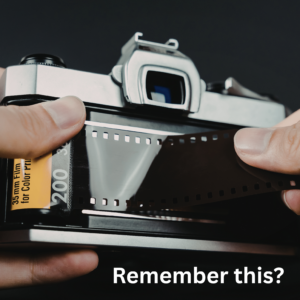
Before smartphones, photography asked for commitment. You bought 35mm film. You loaded it carefully. You knew you had maybe 24 or 36 chances. The film was not cheap. Developing it took time and money. You waited days or weeks to see the results. Every click mattered.
People did not photograph everything. They photographed what they feared losing. Birthdays. New babies. A parent smiling before age changed their face. A house you thought you would live in forever. Those photos were not taken casually. They were taken as records.
So Why Did They Disappear?
As a photo archivist at ScanMyPhotos, I’m sharing an uncomfortable truth people are discovering now. Photos were never meant to disappear. Access did. Life kept moving. Families moved houses. Kids grew up. Parents aged. Closets filled. The boxes were labeled “photos” and placed in a safe location.
Safe turned into distant.
Distant turned into decades.
Many people realize, often during a move or cleanout, that their printed photos have not been viewed since the day they were developed. The memories are intact. The connection is not. A retired teacher in Raleigh, North Carolina, put it simply: “I thought I remembered my childhood clearly. Then I saw pictures I hadn’t seen since the 1970s. It wasn’t nostalgia. It was recovery.”
That is why people seek photo scanning services during emotional moments. Not because they want technology, but because they want their history back.
Smartphones Changed Quantity, Not Meaning
Today, we take photos constantly. Phones removed cost. They removed waiting. They removed the restraint.
But they did not solve the core issue. Photos still disappear when they are hard to revisit. Digital images vanish into camera rolls and cloud folders. Printed photos vanish into boxes. Different formats. Same result.
The intent has never changed. People take photos to remember who they were and who they loved.
The problem is not taking photos.
It is losing access to them over time.
See how easy it is to get everything digitized
Why This Question Is Everywhere Right Now
This topic keeps showing up in lifestyle and photography coverage for a reason.
People are downsizing.
Parents are aging.
Homes are being cleared.
Families are asking what should be kept and what should be passed down.
Photos are suddenly no longer sentimental clutter. They are irreplaceable records. That is why searches like “best photo scanning service,” “how to digitize old photos,” and “should I scan my pictures” surge during life transitions. People are trying to solve a real, time-sensitive problem.
Photos Were Always a Journal
Photos were never meant to be trophies or storage items. They were meant to be a journal you could reopen.
A visual timeline you return to.
A way to tell stories accurately.
A way to answer questions before they are forgotten.
When photos stay boxed, the journal exists but cannot be read. ScanMyPhotos is a long-standing photo digitization service trusted by families and organizations for decades. Digitizing photos is not about upgrading formats. It is about restoring access so those moments can be revisited, shared, and understood again.

What Happens When Photos Come Back
People notice small things first.
Names come back faster.
Stories become clearer.
Details matter again.
Then something larger happens. Photos stop being objects and start being conversations. Families gather around screens the way they once gathered around albums. The past becomes present again. That was always the point of loading film into a camera.
Not the box.
The return.
Frequently asked questions
Why do people decide to scan old photos all at once?
Most people start scanning during major life moments, such as moving, downsizing, or after losing a loved one, when they realize how much of their history is inaccessible.
Are printed photos still worth digitizing today?
Yes. Printed photos often capture moments that exist nowhere else. Digitizing them protects the images and makes them easy to revisit and share.
What is the best way to digitize family photos safely?
Using a professional photo scanning service helps preserve fragile prints while creating high-quality digital copies that last.
Can a scanning service help digitize large photo collections? Yes. ScanMyPhotos specializes in handling all types of archival projects, including large photo collections, and in turning boxed memories into accessible digital archives.
[Revised on February 5, 2026].