
This article is about how to digitize your photos for family reunions.
Gear up for family reunions by digitizing your family photos, 35mm slides, and home movies with ScanMyPhotos.
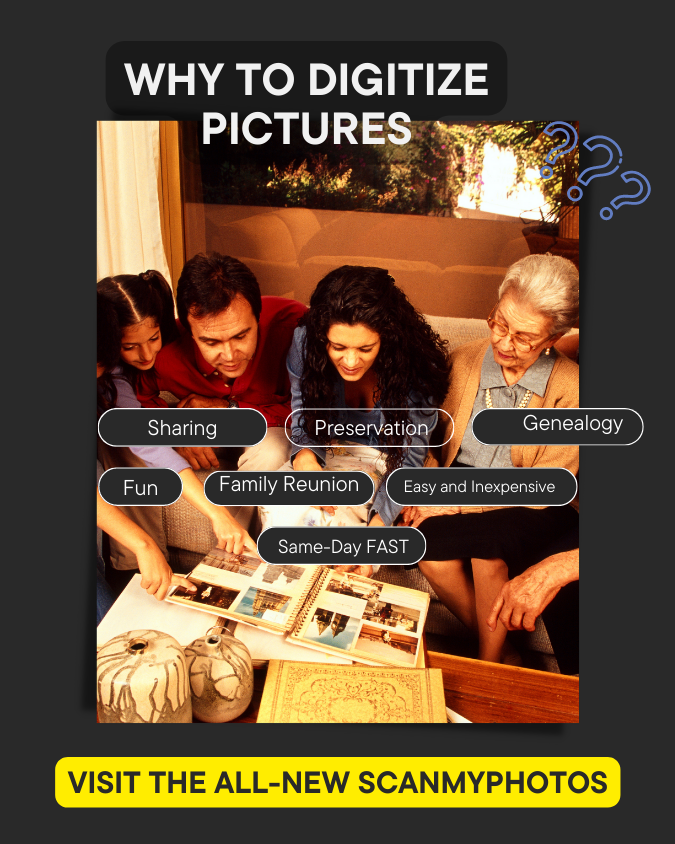
Don’t let your cherished memories be lost! Scan and preserve them for generations to come. Plus, imagine the joy of sharing all those hidden family memories at your next reunion!
- 5 Tips For a Successful Family Reunion
- How to Share Pictures at Family Reunions
- 15 Reasons To Start Digitizing Your Photo Collection Right Now
- Calling all nostalgia lovers, family historians, and photo archivists
The Simple Shift That Makes a Family Reunion Feel Different
You know the feeling. Everyone finally arrives. Hugs happen. Bags get dropped. Phones come out. Conversations start, stall, restart, fade. Then something unexpected happens. An old photo appears on the TV. Someone leans closer. Someone laughs out loud. Someone else says, “I forgot about that.” Phones lower. Stories start moving around the room like they have been waiting for permission. That moment is what people remember.
Why reunions can feel full and still feel distant
Family reunions are emotional by nature, but they can be hard. Different ages. Different lives. Different energy levels. You want everyone to connect, but forcing it never works. Meals pass quickly. Activities feel uneven. Eventually, people retreat into their screens because they are familiar and easy. Old family photos change that without asking anyone to try. They give everyone something shared to react to at the same time. No explaining required.
The memories you forgot were still there
Most families have boxes of photos they have not opened in years. According to a ScanMyPhotos study, 96 percent of printed photos have not been seen since the day they were developed.
That means most of your family history is still hidden. When those photos resurface at a reunion, the reaction is immediate. People do not just look. They feel. A childhood moment hits. A voice from the past feels present again. Someone fills in a detail no one else remembered. You realize you were never missing a conversation. You were missing the trigger.
How to set this up without making it a project
The best part is how simple this can be. Before the reunion, ask everyone to look for old photos, slides, or home movies. Not last-minute. Give them time to dig and remember. That search alone starts the emotional shift. Once the images are digitized, send them to one person who puts together a basic slideshow. No edits. No captions. Just familiar faces and moments playing quietly on a TV with music everyone recognizes. It becomes the background everyone actually pays attention to.
Why does this work for every generation in the room
Kids laugh at hairstyles and fashion. Parents remember chaos and routines. Grandparents supply the context no one else has. Everyone has something to point at. Something to explain. Something to laugh about. Because everyone is already together, the stories unfold naturally. No one has to perform. No one has to lead. The photos do the work.
Feeling safe enough to start matters too
Sending away old photos can feel emotional. They are irreplaceable. That hesitation is real.
That is why many families include their own GPS tracker, such as an AirTag, when mailing photos for digitization. Being able to follow something so meaningful every step of the way brings peace of mind and makes it easier to start earlier rather than postpone again. When stress drops, anticipation grows.
What people don’t expect to feel
Families often think they are organizing photos for a reunion. What they discover is something else entirely. Once shared photos are visible, people stop checking their phones and start watching each other. They laugh harder. They tell stories they did not know they remembered. The room feels warmer. Slower. More connected. Old photos do not entertain a reunion. They gently guide it into the kind of experience you wish you could hold onto longer.