
Your phone may already hold the most important family photo you have. The problem is not that it is gone. The problem is that nobody can find it.
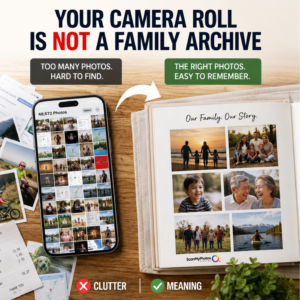
It may be buried between screenshots, receipts, memes, duplicate selfies, accidental videos, online order confirmations, parking spot reminders, and 47 nearly identical sunset pictures. That is the strange new problem with family photos. We take more pictures than any generation in history, but many of the meaningful ones are harder to find than ever.
A camera roll captures everything as you snap photos, while a family photo archive is a special collection meant to preserve what truly matters. Think of the camera roll as quick storage for all your captures, catching every moment in the rush. On the other hand, a family archive helps you organize, understand, and revisit those precious memories that tell your unique story. That’s a really important difference. Today, many of us have thousands, or even tens of thousands of photos scattered across phones, cloud services, old devices, computers, texts, and shared albums. While those photos are technically there, it’s a reminder that simply saving them isn’t enough to truly preserve these memories.
Saved means the file exists. Preserved means someone can find it, know who is in it, understand why it matters, and share it again. That is where many modern family photo collections fall apart.
Families used to lose memories because they had too few photos. Today, we lose them because we have too many. That sounds backward, but it is true. A generation ago, film cost money. Prints cost money. Families usually photographed fewer moments. Not every photo was perfect, but many were printed, placed in albums, written on, passed around, and remembered.
Today, storage feels endless. Every moment gets photographed. Many moments get photographed five, ten, or twenty times. The result is not always a better family record. Often, it is a digital junk drawer. Everything goes in. Almost nothing comes out.
Some of the most cherished family photos aren’t the posed portraits; they’re the everyday moments that truly capture the warmth and joy of family life. Think of a grandparent sharing a laugh at the kitchen table, a child peacefully sleeping in the back seat, or a lively backyard barbecue. Maybe it’s a holiday morning full of excitement or a family dog sitting right in the middle of it all. Perhaps it’s someone washing dishes, someone dancing hilariously, or holding a baby who’s now all grown up. At the moment, these images might seem ordinary or insignificant, but over time they become priceless memories we treasure forever.
Start with digitizing the photos your family would be heartbroken to lose, and organize those first.
Imagine your children, grandchildren, nieces, nephews, or future relatives looking through your photos thirty years from now. They probably will not want to scroll through 48,000 random images. They may not care about every screenshot, meal, receipt, blurry pet photo, or duplicate vacation shot.
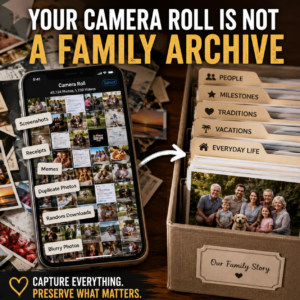
But they may deeply care about a smaller collection that shows who you loved, where you went, what you celebrated, what home looked like, and how people changed over time. That is the purpose of a family photo archive. It gives the next generation a way in. It says: start here.
A family photo archive is all about capturing the essence of your story, not just every single image. Focus on the photos that truly tell your family’s unique story. Begin with the ones who matter most—your loved ones. Keep clear photos of parents, grandparents, children, siblings, cousins, close friends, and those special relatives who have shaped your life. Don’t worry about only saving perfect posed shots; it’s the personality that counts—the laugh, the look, the gesture, the moment that feels just like them. Remember to include family milestones too: birthdays, weddings, anniversaries, graduations, holidays, reunions, memorials, new homes, first days of school, retirements, and other meaningful events. These help future generations understand your family’s journey and celebrate what makes you uniquely you.
Do not forget everyday life. This category may become the most meaningful one. Save photos of kitchens, cars, bedrooms, backyards, favorite restaurants, family traditions, neighborhood streets, pets, hobbies, and ordinary routines. Today, they may seem too simple. Someday, they may explain everything.

Older family photos also belong in the archive. Printed photos, 35mm slides, negatives, and home movie reels often hold the missing chapters. These are the pictures that may show family members before you knew them. Before they were parents. Before they were grandparents. Before life changed. Digitizing them helps connect the old family story with the modern one.
The most powerful family photos are the ones with stories attached. A picture becomes more meaningful when someone knows who is in it, where it was taken, what year it was, why that day mattered, and what happened before or after the photo. A family archive should not just collect images. It should rescue context.
The good news is that you do not have to organize your entire digital life in one weekend. That is how people quit. Start with 30 minutes.
Open your phone and create one album called “Family Archive: Start Here.” Then add only 25 photos. Not 2,500. Just 25.
Choose the photos that would matter most if someone in your family asked what life felt like back then. Choose pictures of the people who matter most. Choose moments you would be heartbroken to lose. Choose photos that show real personality. Choose pictures that tell a story without needing much explanation. This small album becomes the beginning of your family archive. Once you have those 25 photos, add names, dates, places, or short notes where possible. That is how you turn a pile of images into memory.
You do not have to delete everything, but you should make your meaningful photos easier to find. Consider removing duplicate images, accidental shots, blurry photos with no emotional value, screenshots, receipts, parking reminders, online order confirmations, random downloads, memes, temporary images, and photos you no longer need.
The goal is not to erase your life. The goal is to make your most important memories easier to see.
Printed photos still matter, too. Digital photos are convenient, but displayed photos are often remembered more. A picture on a wall gets noticed. A photo book gets opened. A framed image becomes part of daily life. A digital frame can bring old memories back into the room. A printed photograph can start a conversation that a hidden file never will. That is why a family archive should not only live in the cloud. The most meaningful images deserve to be seen, shared, printed, displayed, or turned into something people can gather around.
Memories gain value when people revisit them.
The biggest risk is not losing the photo file. The bigger risk is losing the story. Names get forgotten. Places become unclear. Dates disappear. Family members pass away. The person who knew the answer is no longer there to ask.
That is why organizing family photos is not just a digital cleanup project. It is a family history project.
After helping families preserve more than one billion photos, ScanMyPhotos.com has seen the same pattern again and again: people rarely regret saving meaningful memories. They regret waiting until no one remembers the names.
Here’s a simple way to think about it: a camera roll captures everything you take, but a family archive is all about preserving what truly matters to you. Your camera roll updates automatically, storing images from today, while a family archive is created intentionally to tell the story of your life and those you love. It’s for everyone who comes after you. You don’t need to fix every photo right now—start small. Choose one person, one year, one special family event, or a single box of old prints. Maybe pick one album on your phone. Focus on the photos that would help someone in your family ask, “What was life like back then?” Those are the pictures worth saving first, and they will become precious memories for generations to come.
Someday, someone you love may go looking for proof of who mattered, what changed, what was celebrated, and what life felt like. Make sure they do not have to search through 48,000 forgotten images to find it.
Frequently Asked Questions
How many photos does the average person have on their phone?
The number varies widely, but many people now keep thousands or tens of thousands of photos across phones, cloud storage, computers, and old devices. The better question is not how many photos you have. It is how many important photos you can actually find.
How do I organize thousands of photos on my iPhone?
Start small. Create a favorites album, delete obvious duplicates, group images by year or event, label important people, and separate family memories from screenshots and temporary images. Do not try to organize everything at once. Begin with one year, one person, or one important event.
What photos should I keep?
Keep photos that show people, relationships, milestones, traditions, places, personality, and meaningful everyday moments. The best photos are not always perfect. They are the ones that help tell your family’s story.
What photos should I delete?
Consider deleting duplicates, accidental shots, blurry images with no value, screenshots, receipts, order confirmations, parking reminders, and temporary images. The goal is not to delete memories. The goal is to reduce clutter so the important photos are easier to find.
Are printed photos still important?
Yes. Printed photos, photo books, framed pictures, and digital frames are often viewed more than images hidden in cloud storage. A photo that is seen becomes part of family life again.
What is the best way to preserve family photos?
The strongest approach is to digitize older printed photos, slides, negatives, and home movies, organize important digital images into albums, keep multiple backups, and create a curated family archive that tells your family’s story.
What is the difference between a camera roll and a family archive?
A camera roll captures everything. A family archive intentionally preserves the photos and videos that best explain who your family is, what mattered, and what future generations may want to remember.
[Revised on June 15, 2026]