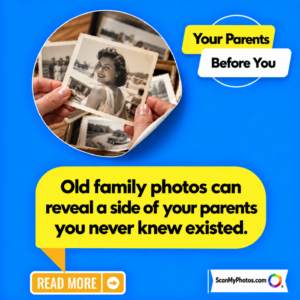
Key Takeaways
- Old family photos differ from outdated technology; they hold unique memories and identities.
- Unlike CDs or VHS tapes, old family photos never became obsolete; they merely lost visibility over time.
- Photographs serve as a bridge across generations, reflecting relationships and belonging.
- When old photos get scanned and shared, they revive memories and spark conversations, unlike other items.
- Ultimately, we remember faces, emphasizing the importance of keeping old family photos accessible and visible.
Estimated reading time: 5 minutes
The Things We Kept Too Long: old family photos hidden in drawers
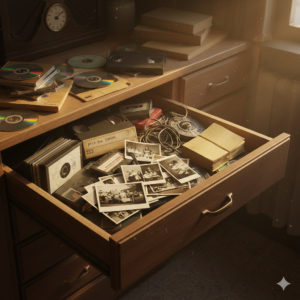 Open a random drawer in your home, and you may find a small collection of items that once felt important. CDs stacked in plastic cases. A few VHS tapes in soft sleeves. Cassette tapes with handwritten labels. Maybe even a floppy disk, tucked away like a souvenir from another era.
Each of them once promised something better. Better sound. Better pictures. More convenience. For a while, they delivered. Then life moved on. Music slipped into phones. Movies moved to streaming. Storage went somewhere we can’t quite see. The objects stayed behind, no longer useful but somehow still hard to part with.
Not because we need them. Because they remind us of a time that mattered. Most of these things can go. One category should not.
Why Old Technology Feels Personal
- A CD is never just music. It’s the long drive home with the windows down.
- A VHS tape is not just plastic. It’s a birthday party filmed by someone laughing behind the camera.
- A cassette is not just sound. It’s a voice you haven’t heard in years.
- We hold on to these things because they carry memory, not because they still work.
But there’s a difference worth noticing about old family photos. The music still exists. The movies still stream. The songs still play. The content survived, even after the container became obsolete. Printed photographs are different.
The One Thing That Was Never Replaced
Family photos were never replaced. They were simply set aside. When film was developed decades ago, the prints felt permanent. Warm. Glossy. Real. Proof that a moment mattered enough to be captured. Then cameras went digital. Phones followed. Thousands of images replaced dozens. The old photos were stored in boxes, albums, envelopes, and drawers. Today, ninety-six percent of printed photographs haven’t been seen since the day they were developed. Not because they aren’t important. Because they’re hidden.
There is no modern substitute for those moments. No streaming service for your childhood kitchen. No cloud backup for a grandparent’s laugh caught mid-gesture. If those photographs fade or disappear, nothing replaces them.
Why Photos Age Differently
Most technology becomes obsolete because something better arrives. Photos never became obsolete. Access to them did. A slide carousel doesn’t fail because it’s old. It fails because few people still own a projector. A box of snapshots doesn’t lose meaning. It loses visibility. Photos are the only analog objects in the home that grow more valuable over time.
- They don’t age out.
- They age in.
They become proof of relationships. Evidence of belonging. A bridge between generations who never met. Everything else in that drawer once served convenience. Photos serve identity. Yes, they still aren’t digitized.
What We Almost Let Go Of
We’ve seen this before. Handwritten letters were discarded when email arrived. Voicemails were deleted before anyone realized how much those voices would matter. Printed photographs are at a similar crossroads. They aren’t clutter. They’re unindexed history. They don’t need nostalgia. They need to be seen. When old photos get scanned and come back into view, something shifts. Scrolling stops. Conversations slow. Stories return, often with details no one knew they remembered.
That doesn’t happen with a CD rack. It happens with photos.
A Simple Test
Imagine the drawer caught fire tomorrow. The storage box in the attic had sat in mildew and dust for decades. What would you miss? Not the CDs. Not the tapes. Not the disks. You would miss the faces.
Those photographs were never meant to stay hidden. They were meant to be shared, talked about, and carried forward. Unlike every other outdated object in the drawer, they still have a purpose. They’re just waiting to be seen again.
Photo Scanning Frequently Asked Questions (FAQs)
Old family photos capture moments that were never recorded digitally. If they are lost or damaged, there is no way to recreate those memories.
CDs and VHS tapes became obsolete because their content moved to newer formats. Printed photographs never moved. They exist only in their original form.
As people age and stories fade, photographs become primary records of identity, relationships, and shared family history.
You can digitize old family photos by using a photo scanning service like ScanMyPhotos.com. You mail in your printed photos, they scan each one into digital images, and then return both your photos and the digital files. This makes it easy to protect, view, and share family memories without buying special equipment.

[Revised on January 20, 2026].