
Key Takeaways
- People inquire about photo scanning questions due to emotional connections to their memories.
- Emotions behind questions reveal a desire to preserve irreplaceable moments captured in photographs.
- Common concerns include the fragility of photos, the risk in mailing them, and feelings of anxiety during the process.
- Organizing photo tips, grouping them by category, and adding index card notes helps archivists understand their significance.
- Photos evoke deep emotions, connecting individuals to their past, and require careful handling to honor that sentiment.
Estimated reading time: 8 minutes
What People Are Asking When They Reach Out About Digitizing Their Photos
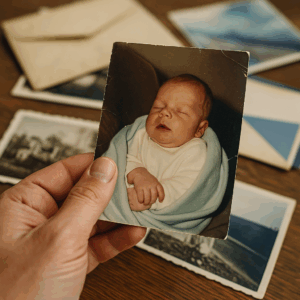
When people reach out to ScanMyPhotos with questions about their old photos, they aren’t merely inquiring about scanners or image formats. Instead, they are expressing deeper concerns related to fear, time, memory, and the irreplaceable moments that have shaped their lives. While the questions may seem technical on the surface, the underlying emotions are always personal.
Many of these inquiries start quietly. For example, a man in Chicago finds a faded photograph of his daughter on the day she was born and feels a sudden fear that the moment captured in the picture might fade away. A woman in Portland opens an album that is beginning to crumble at the edges and wonders if she has waited too long to preserve its contents. Meanwhile, a son in Florida discovers a photo stuck to a glass frame after a humid summer and realizes he might need help to save it.
These small discoveries often become emotional turning points, prompting people to seek answers and reach out to photo archivists. They reveal a universal truth about the way humans hold onto their past.
As a photo archivist at ScanMyPhotos, I hear these questions every day from individuals who want to protect the stories that matter most to them. What they ask reflects a larger narrative about love, loss, and the delicate way memories endure on paper.
Here are the ten most common questions people ask, and what those questions truly mean beneath the surface.
────────────────────────
Ten FAQ’s Asked to Photo Archivist
1. “Should I add an AirTag or GPS tracker when I mail my photos?” This question has become one of the most common inquiries, revealing much about the emotional significance of every box of photos. When someone asks about including an AirTag or a Tile, they are really inquiring whether they can stay connected to their memories throughout their journey. The photos inside the box are irreplaceable; they represent childhoods, milestones, generations, and moments that have shaped their lives. The tracker serves as a means to feel present. People check the location on their phones in the same way they would check on a loved one traveling home. That blinking dot provides comfort. Link for more info on adding a GPS tracker with your boxes of photos to get scanned. Adding a tracker is simple. Slip the device into the box before sealing it. It allows you to follow your memories from your home to the scanning facility and back again. And while it is optional, many people tell me it brings a sense of calm they did not expect. It gives them a feeling of control and connection. When you mail something this meaningful, knowing where it is helps steady your heart.
2. “What if my photos are stuck to the glass frame?” People often discover stuck photos at unexpected times—after moving, following a humid summer, during or after a flood. When they encounter this situation, they typically feel a surge of panic, fearing that peeling back the glass might mean losing the only clear image of a loved one. This concern is understandable. However, the good news is that with patience and careful handling, you can often salvage much more than you might think. The most important step is to stop trying to pull the photo free from the frame. Instead, seek the guidance of a professional. Many images can still be digitized at high quality, even if they remain attached to the glass.
3. “How do I mail fragile photos without something going wrong?” Many people worry when they are about to ship their photos. They envision storms, sorting centers, careless handling, or a package left on a porch in bad weather. Fortunately, the best way to protect your photos is simple and surprisingly effective. Start by placing your photos in a sturdy box, ensuring everything remains flat. Next, slip the entire bundle into a clean plastic garbage bag before sealing it. This creates a weatherproof layer that shields your memories from rain, snow, spills, and humidity. Additionally, you can request that your photos be returned using the same method for added peace of mind. If your photos are not in perfect condition, please don’t send them in, as they must follow these instructions for preparing your photos. Here’s something that many find reassuring: At ScanMyPhotos, your digitized images are backed up before your originals begin their return trip. If anything unexpected happens to the physical box during shipping, your JPEG files can be resent. Knowing that the digital versions are safe gives you one more reason to relax.
4. “What if my albums are falling apart?” Old albums are like time capsules, capturing memories of weddings, holidays, and homes that no longer exist. When an album starts to deteriorate, people often blame themselves, thinking they waited too long to preserve it. However, the decay of albums is a natural process. Glue breaks down, plastic becomes yellow, and paper ages. None of this indicates a failure on anyone’s part. Sending physical photo albums is also impractical. Photos are often scattered or stuck together, covered in glue, or in other conditions that make scanning or creating scrapbook pages impossible.
5. “My photos are fading. Is there anything I can do?” Fading is an emotional experience that often begins long before it becomes visible. People usually gaze at a photo for an extended period, trying to recall its original colors. They hold it up to the light, hoping that the memory might resurface. However, fading does not mean the moment is lost. Digitizing the image preserves what remains and often reveals details that the eye can no longer detect. Fading is simply a sign that the photo has lived a long life, having been touched, displayed, carried, and cherished.
6. “Is it normal to feel nervous sending these?” Yes. More than you might imagine. People feel nervous because the photos are more than paper. They are physical memories. They are proof of birthdays, reunions, vacations, friendships, and childhood rooms that no longer exist. Nervousness is not a weakness. It is a sign that something matters deeply. Every archivist expects this and treats each project with the care those feelings deserve. Always add your own GPS tracker to follow the journey, and your files are backed up and secured.
7. “How do I organize everything before sending it?”Many people feel embarrassed about the state of their photo collections. Some boxes are mixed, and some envelopes are unmarked. However, real life isn’t organized by decades; memories come in stacks rather than a linear timeline. You don’t need to sort everything perfectly. Instead, consider grouping the photos by category and adding handwritten notes on index cards to separate each bundle. You can use rubber bands to keep each batch organized.
8. “Should I add notes for my photo archivist?” Notes are one of the most powerful things you can include. They turn a project into a story. Some people write, “Please take extra care with the photo of my mom in the blue sweater.” Others say, “This is the only picture we have of my grandfather.” These small details matter. They guide how we handle your photos, which ones we slow down for, and which ones we treat with a little extra softness. Notes help your archivist see the memory through your eyes.
9. “What if I feel overwhelmed by how many photos I have?” Feeling overwhelmed is normal. Families often accumulate decades’ worth of pictures stored in closets and bins, and when faced with such a volume, it’s common to feel frozen. The good news is that you don’t need to start big. Begin with just one box or a small stack of photos. Every project begins with a single handful. Once you take that first step, the rest becomes easier. To easily identify how many photos you have, start by counting one hundred snapshots and stacking them in a pile. For example, one hundred photos is one inch in height. Stack those together, so two hundred pictures would correspond to about two inches in height, and so on.
10. “Why does this feel so emotional?” Because photos are not objects. They are pieces of your life captured in color and shadow. They hold voices you miss, rooms you remember, and people you still love. The emotion you feel when you have an old photo is not nostalgia. It is recognition. It is the part of you that remembers what life felt like at the moment the shutter clicked. That feeling deserves care.
[Revised on November 14, 2025].