Key Takeaways
- Friendship typos showcase the beauty of authenticity and trust, like unedited photographs.
- True friends embrace imperfections, expecting typos and shorthand in messages.
- Memorable photographs often reflect unfiltered, awkward moments rather than technical perfection.
- Sharing typo-filled texts mirrors sharing unedited photos; both convey real stories and connections.
- Next time, try sending an unedited message or a flawed photo to celebrate imperfect moments.
Estimated reading time: 4 minutes
Friendship Typos and Photography
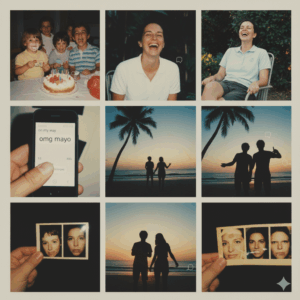 Typos are proof of real friendship: The texts you send without editing are the same as the photos you love most — unfiltered, imperfect, and deeply real.
Why Imperfection Connects Us
If you’re still editing your messages before sending them to your best friend, consider this: perhaps they aren’t really your best friend. True friends don’t just tolerate your typos—they expect them. They smile when autocorrect changes “on my way” to “omg mayo.” They understand your shorthand, your inside jokes, and even when you send a message with just three words instead of a full sentence, they get it. That informal shorthand? It’s a unique language that only the two of you understand. And that’s what makes it beautiful.
In a world where AI fixes every comma, sharpens every photo, and can rewrite an email in seconds, our closest connections live in the opposite space. They thrive in the clumsy, the unpolished, the real.
The Parallel With Photography
Think about the snapshots you love most. They’re rarely the “perfect” ones. It’s the blurry photo from your 8th birthday where half the cake is out of frame. It’s your cousin’s neon outfit at the school dance. It’s Grandma laughing so hard she’s nearly falling out of the picture. These aren’t staged. Not posed. They’re unfiltered. They’re the proof of life lived.
Photography has always chased technical perfection — sharper lenses, higher megapixels, flawless retouching. But when you look back, it’s often the awkward, imperfect moments that carry the most meaning. Just like typos, those flaws are the fingerprints of authenticity.
Photos Are Just Texts in Visual Form
Sending a typo-filled text is like sharing a photo without editing it. It’s a shorthand, a language of trust. When you scan those old analog snapshots and send them as-is, you’re handing someone the real story: the crooked smile, the questionable haircut, the vacation shot with your thumb peeking into the frame. AI can polish business headshots. But the pictures that matter to your family don’t need polish. They need presence.
A Customer’s Story
“I had a stack of old photos I almost tossed because they looked too blurry to matter,” writes David from Chicago. “But once ScanMyPhotos digitized them, they became my family’s favorite album. My brother still jokes about my haircut in 1983. If those photos had been ‘perfect,’ they wouldn’t have been half as real.”
A Challenge Worth Trying
Next time you text your best friend, try not to correct your typos. Just send the message as it is. Additionally, find one scanned photo that isn’t “Instagram-ready” and share it in the group chat. See how everyone reacts. Sometimes, the best way to show love isn’t through a perfect message; it’s in the little mistakes that bring a smile to someone’s face.
Sidebar: Top 5 Autocorrect Fails We Secretly Love
- “Omg mayo” instead of “On my way.” Perfect if you’re already headed to the store.
- “Duck this.” A duck emoji has never solved an argument. 🦆
- “Send nude” instead of “Send note.” Your boss doesn’t think it’s funny.
- “I’m in the oven” instead of “I’m in the other room.” Dinner is served.
- “Let’s grab lunch, Satan.” Santa is still waiting for an apology. 🎅
FAQs
Q: Why connect typos to photography? Because both remind us that imperfections are where real connection lives — in language and in pictures.
Q: Should I edit old scanned photos? Some restoration is valuable, but leaving quirks intact keeps their personality. Those flaws tell the story.
Q: Why digitize imperfect photos at all? Because the next generation treasures honesty over polish. They want to laugh at your thumb-in-the-frame just as much as your smile.