
Estimated reading time: 4 minutes
Key Takeaways
- Photography is evolving like the movie industry, moving from film to digital and now towards AI and immersive experiences.
- Just as streaming transformed movies, photography awaits its own breakthrough technologies, like holograms and mixed reality albums.
- Digitizing old photos is crucial for embracing future advancements; it allows memories to remain accessible and relevant.
- Technological innovation aims to make capturing and sharing memories easier, fostering deeper connections with our past.
- The future of photography promises transformative experiences, enhancing how we remember and relive our lives.
The Friday Night Ritual and The Future of Photography
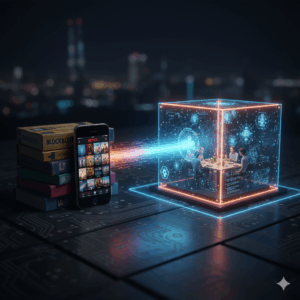 From Blockbuster to Netflix, the movie industry has undergone a significant transformation. Photography has followed a similar trajectory, but what’s the next leap forward? The evolution of photography reflects the revolution in movies, and there are exciting developments on the horizon. This article is about the future of photography.
Remember when Friday nights meant heading to Blockbuster? The rows of VHS tapes, the bright aisles, and the thrill of selecting the perfect movie for the weekend created a unique experience. If you missed a film in theaters, picking it up at Blockbuster was your chance to catch up on it. Then came Netflix, first with DVDs by mail and later with streaming, which changed everything. Suddenly, Hollywood was accessible in your pocket. The introduction of the iPhone solidified this shift, making streaming the standard method for watching films.
Photography’s Parallel Path
- Photography has walked the same timeline.
- First, you loaded film, dropped it at the lab, and waited.
- Then one-hour photo booths sped things up.
- Digital cameras marked the end of the film era.
- Today, every phone is a complete studio. Shoot, edit, and share instantly.
- Each step felt like the end of one era and the start of another.
A Customer’s Perspective
“I had boxes of old family pictures that sat untouched for decades,” writes Karen from Denver. “ScanMyPhotos turned them into digital albums my kids scroll through on their iPads. It felt like going from waiting in line at Blockbuster to streaming Netflix. Suddenly, our memories are on demand.”
The New Frontier
So what’s next? Just as streaming was the breakthrough for movies, photography is waiting for its next leap forward. Some possibilities are already in motion:
- AI restoration brings old photos back to life.
- Memory-based storytelling where photos connect with voices, text, and emotion.
- Mixed reality photo albums that turn static images into immersive experiences.
- Holographic snapshots you can actually step inside.
- The frontier is wide open.
Why It Matters
Think about how many family memories are currently stored away in boxes, unseen. Every advancement in photography has aimed to make it easier to capture, preserve, and share those memories. The next change in this field will involve not only technology but also a focus on fostering connections.
The Streaming Moment for Photos
Movies found their “streaming moment.” Photography hasn’t had its final leap yet. When it comes, it will change how we remember, share, and even relive our lives. That’s why digitizing old photos is so important today. If the future is immersive, AI-powered, and holographic, those snapshots need to be ready.
Photo Scanning FAQs
Why compare movies and photos? Both industries demonstrate how technology is rapidly reshaping our habits.
Q: What role does AI play in photography’s future? AI can restore damaged images, add context, and even help create memory-based albums that feel alive.
Q: Why digitize photos now? Because innovation is moving quickly. Analog photos stuck in boxes can’t take part in the next frontier—whether that’s AI, mixed reality, or holograms.