
What To Do With Old Photos After Parents Die
Key Takeaways
- After losing a parent, old photos can evoke strong emotions as they represent shared memories and experiences.
- Music also triggers memories, connecting us to past moments just like old photographs do.
- To manage old photos after parents die, start by safely storing them and select meaningful images to digitize first.
- Sharing digitized photos with family helps complete stories and keeps the memories alive for future generations.
- Opening the box of photos is not about organizing; it’s about honoring the memories and conversations waiting to be had.
Estimated reading time: 8 minutes
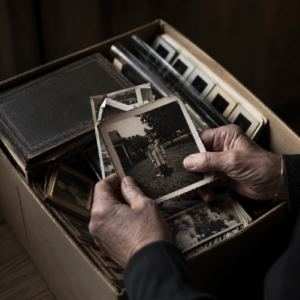 The Box No One Knows How To Open
After a parent dies, many families inherit the same thing: a box no one knows how to open. It may be in a closet, garage, hallway cabinet, spare bedroom, or storage unit. Inside are old prints curled at the edges, envelopes from photo labs that closed years ago, 35mm slides in plastic trays, home movie reels with handwritten labels, and albums that smell faintly of paper, time, and the homes they came from.
At first, the box looks like a sorting project. Then you lift the lid and realize it is not really about sorting at all. It is about deciding how much memory your heart can handle in one afternoon.
Why Old Photos Feel So Heavy
That is why old family photos can feel so overwhelming after a parent dies. They are not just pictures. They are evidence of a life you shared. They hold the rooms, cars, clothes, birthday cakes, beaches, school plays, front porches, kitchen tables, and faces that made up the world before loss entered it.
The surprising part is that grief often returns through the smallest details. Not the formal portrait. Not the big family vacation photo where everyone was told to smile. It may be the blurry picture of your father holding a garden hose in the driveway. Your mother leaning over a birthday cake. A hand reaching into the frame. A jacket hanging on the back of a chair. The old refrigerator. The wallpaper. The curtains. The car in the driveway that everyone had forgotten about until that exact second.
Those details can bring a parent back in a way words rarely can.
When A Song Brings Them Back
Music does it, too. A song comes on in a grocery store, and suddenly you are not thinking about your parent. You are back in the kitchen while dinner is being made. You are in the back seat of the family car during a long summer drive. You are hearing the record that played on Sunday mornings while someone made coffee and the newspaper was spread across the table.
That is why certain songs can make people cry years after a parent is gone. The reaction is not strange. It is recognition. Music carries feeling, routine, place, and time. One familiar song can bring back the sound of a house, the mood of a season, and the feeling of being young enough to believe everyone would always be there.
The Photos Our Parents Chose To Save
Old photos work differently. They do not rush in like music. They wait. They sit in boxes until someone is ready. Then, when they are opened, they bring back visual proof. This happened. We were there. They were here. We were loved.
That proof matters because every old photograph required intention. A parent bought the film. They loaded the camera. They chose when to take the picture. They pressed the shutter because something about that moment felt worth keeping. Later, they paid to have the film developed, opened the envelope, looked through the prints, maybe wrote on the back, maybe slipped them into an album, maybe placed the slides into a carousel.
Then decades passed. That is what makes old photos so emotional after a parent dies. The person who saved the moment may no longer be here, but the moment still is.
When Home Movies Start Moving Again
A home movie reel can be even more powerful because it brings movement back. Suddenly, your father is not just in a still photograph. He is walking across the yard. Your mother is turning toward the camera. Someone is waving from a porch. A child is running through sprinklers. A birthday cake is entering a dark room. A person you miss is alive again in motion, even if only for a few seconds.
That can feel wild. It can also feel cathartic.
Why Grief Can Feel Cathartic
Many people assume grief means trying to move away from the person they lost. But in real life, healing often means finding a different way to stay connected. Old photos, songs, slides, and movie reels can help people keep that connection without pretending the loss did not happen.
The goal is not to get stuck in the past. The goal is to let the past keep speaking.
The Community Hidden In The Background
This is also where old family photos become bigger than family. Look carefully at the background of almost any childhood photo, and you may find a lost version of your community. The old grocery store. The corner restaurant. The school hallway. The church picnic. The Little League field. The parade route. The neighbor’s car. The street before everything changed.
That is why digitized photos can become so meaningful when shared. A recent phone picture may get a quick like. An old photo from 1978 can start a reunion in the comments.

Why Posting Old Photos Feels Different
Someone recognizes the teacher. Someone remembers the diner. Someone says their father worked in that building. Someone tags a cousin. Someone asks what year it was. Someone notices the sign in the background. One picture becomes ten stories because everyone brings a memory to it.
That is the joy of digitizing old photos, slides, and home movies. It does not just preserve what one family remembers. It also lets others help complete the story.
Seeing Your Parents Before You Knew Them
For adult children, this can be especially powerful. A photo may show your parent not only as Mom or Dad, but as a young person with friends, jokes, hairstyles, cars, clothes, and dreams you never fully knew. You may see them before marriage, before children, before illness, before age, before the version of them you knew best.
That can be a gift. It can also be a shock. Parents can feel so permanent in our minds that seeing their earlier life reminds us they had whole chapters before we arrived.
How To Begin Without Feeling Overwhelmed
Maybe that is why these boxes are so hard to open. They do not hold a single emotion. They hold them all. Love, regret, gratitude, humor, sadness, surprise, longing, and sometimes relief. You may laugh at the furniture. You may call a sibling about the car. You may stare at one picture longer than expected. You may need to stop halfway through the box. That is normal. Memory is not a filing cabinet. It is a room you enter carefully.
The best first step is not to organize everything perfectly. It is simply to start with what feels most important. One box. One album. One carousel. One reel. One envelope with handwriting you recognize.
Why Sharing Helps Finish The Story
Digitizing those memories gives them a safer future. It also makes them easier to share with siblings, children, grandchildren, cousins, classmates, neighbors, and old friends who may recognize details you missed. The image that feels ordinary to you may be the exact picture someone else has wished existed for years.
And that may be the most beautiful part.
The photos our parents saved were rarely random. They were small, real-time decisions. This birthday matters. This trip matters. This backyard matters. This person matters. This day matters. Years later, those decisions become a kind of message. They were telling us, without knowing it, that life is worth remembering.
The Box Is Not Clutter
So what should you do with old photos after parents die?
Open the box when you are ready. Go slowly. Let yourself feel what comes up. Save the images before time, fading, moisture, heat, or another move makes the decision for you. Share the ones that make people talk. Ask relatives to help name faces and places. Post the community pictures where others can add what they remember.
Do not treat the box like clutter. Treat it like a conversation your family has not finished yet.
The One Photo That Gives You Back The Room
Because sometimes a parent comes back through a song. Sometimes through a slide carousel. Sometimes through a home movie reel. Sometimes through a faded print you almost skipped. And sometimes one old photo does what no recent camera roll picture can.
It gives you back the room.
Here are the (FAQ) questions many ask when deciding what to do with old photos, slides, and home movies after losing a parent.
What should I do with old photos after my parents die? Start by keeping the photos safe, then choose the most meaningful prints, slides, albums, and home movies to digitize first. Once they are scanned, you can share them with family, ask relatives to identify people and places, and preserve them for future generations.
Why do old photos feel so emotional after losing a parent? Old photos bring back small visual details that memory may have softened, including rooms, clothing, cars, handwriting, faces, and everyday moments. These details can make the past feel present again.
Should I share old family photos on social media? Yes, especially when they show hometown places, schools, neighborhoods, relatives, or community events. Shared old photos often invite comments, tags, stories, and names that help complete the family history.
What to do next
Start with the one box you keep avoiding. Photo archival services like ScanMyPhotos can help turn those hidden photos, slides, and movie reels into memories your family can finally see, share, and keep.
[Revised June 1, 2026]