
Key Takeaways
- Photography and loneliness often intersect, highlighting how solitude enhances awareness and the value of moments.
- Loneliness leads people to notice details and emotions more deeply, prompting them to take photographs to preserve those experiences.
- Photographs capture emotional states, serving as records of presence and attention, rather than just events that occurred.
- While photography may start in solitude, it fosters connections over time as stories and shared experiences develop.
- Ultimately, photography serves as a quiet record of inner life, helping individuals engage with their feelings and mark meaningful moments.
Estimated reading time: 5 minutes
Why Loneliness Draws People to Photography and What Those Images Mean
After decades as a photo archivist, you notice patterns that have nothing to do with cameras or technology. You see them in the moments people choose to preserve, in how photographs resurface during certain seasons of life, and in the notes left on order forms. Again and again, the same connection appears. Photography and loneliness often arrive together, not because people are unhappy, but because solitude sharpens attention and makes certain moments feel worth saving.
Loneliness rarely announces itself. It slips into ordinary life almost unnoticed. An evening stretches longer than expected. A walk is taken without telling anyone. Life continues nearby, but not quite with you at its center. These are not dramatic moments. They are common. And for many people, this is when photography begins to matter more.
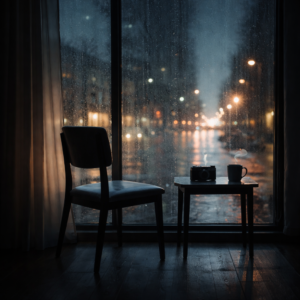 Photography enters these moments not as a solution, but as a companion. Solitude changes the way people see. When there is space, attention slows. Light lingers on walls. Shadows feel intentional. Ordinary rooms take on a kind of patience. The camera becomes a reason to pause without explanation, a way to observe without needing conversation or performance.
To photograph is to stand slightly apart from life. You frame rather than engage. You witness rather than interrupt. You remain present without demanding attention. That position mirrors how loneliness often feels, close enough to observe what is happening yet just outside the center of it. Photography gives that emotional distance a shape. It turns separation into perspective rather than something to fix.
Some of the most affecting photographs contain no people at all. An unoccupied chair. A room with the lights still on. A street just after something ended. These images feel heavy because absence does the work. Loneliness is rarely about being unseen. It is about what should be there but is not. Photography captures that tension with a clarity words often cannot, leaving the viewer to supply the memory. There is another form of solitude that appears when people look at old photographs. It is not the loneliness of being alone now, but the loneliness of realizing how much closeness has already passed. Old images confirm that love, routine, and togetherness were once real, while quietly reminding us that time moved forward anyway. This is why people often sort through old photographs alone. The experience is private, reflective, and emotionally layered.
Digital photography changed how quickly images travel, but it did not change the underlying human need. Digitizing and sharing a photo is often a request for acknowledgment, a hope that someone will see what you saw and feel what you felt. When nothing comes back, the loneliness sharpens. The image moves on, but the feeling remains. Technology altered the speed of exchange, not the emotional stakes.
Photography is sometimes described as isolating, but that interpretation misses what happens over time. For many people, photography becomes a bridge. Those who photograph learn to slow down and observe again. Gradually, images are shared, stories attach themselves, and connections form without being forced. Photography often begins in solitude, but it rarely ends there.
Seen this way, the connection between photography and loneliness explains why images carry such emotional weight. Photographs are not simply records of what happened. They are evidence of attention. When someone takes a photograph, they are saying that something mattered, even if no one else was there at the time. In a world that moves quickly and rarely pauses, that quiet act of noticing can be enough to make life feel connected again.
Epilogue
Photography does not cure loneliness, and it does not pretend to. What it offers instead is something smaller and more durable. A reason to look closely. A place for attention to land when words feel unnecessary. A way to stay near the world without needing to explain yourself. Most photographs are taken in moments that feel unimportant at the time. A chair was left where someone had stood. Light passing across a room. A face caught mid-thought. Only later do we understand what the image was really holding. Not a scene, but a state of being. Proof that we were present, even when no one else noticed.
In this way, photography becomes a quiet record of inner life. It preserves how it felt to be there, not just what was there. It reminds us that solitude is not absence, but a different way of paying attention. And that attention, once given, has a way of returning to us. If loneliness is the space between moments of connection, photographs help us inhabit that space without fear. They mark time, hold meaning, and leave behind evidence that something mattered. Sometimes, that is enough to carry us forward.
Frequently Asked Questions
Why is photography linked to loneliness? Photography is often linked to loneliness because solitude increases awareness and reflection. When people feel alone, they tend to notice details, emotions, and moments more deeply, which naturally leads to taking photographs.
Does photography help with loneliness or make it worse? Photography can help with loneliness by giving people a way to process feelings and create meaning. While sharing photos online can sometimes increase isolation, the act of photographing itself often supports reflection and emotional connection over time.
Why do photos taken during lonely moments feel more meaningful later? Photos taken during lonely moments feel more meaningful because they capture emotional states, not just events. Over time, these images serve as reminders of attention, presence, and how a moment truly felt.
[Updated December 28, 2025].